
Commercial real estate can be one of the most powerful engines of long-term wealth — but only when approached with patience, clear analysis, and a strategy that prioritizes real income over speculation. That’s exactly where business properties aggr8investing comes in: a disciplined, data-guided methodology designed to help investors find and acquire commercial assets that deliver predictable returns today and appreciation over time.
Unlike traditional investing approaches that chase price gains or follow market buzzwords, business properties aggr8investing focuses on fundamentals: tenant quality, lease structure, operating performance, and the broader economic drivers that strengthen or weaken commercial property outcomes.
This article breaks down this strategy in practical, real-world terms, giving you the perspective and tools you need to begin—or refine—your commercial property investment journey.
What Exactly Is Business Properties Aggr8Investing?
At its core, business properties aggr8investing is not a product or a get‑rich‑quick scheme — it’s a framework for buying, managing, and scaling commercial real estate investments responsibly.
It emphasizes:
- Income-first investing: Prioritizing properties with strong, recurring rent flows.
- Long-term leases: Leveraging the power of extended lease terms for stability.
- Performance data over speculation: Making decisions driven by market and property analytics.
- Asset-level discipline: Modeling every possible cost and income variable before purchase.
In essence, it’s about treating commercial real estate like a business — not a gamble.
Core Benefits of Business Properties Aggr8Investing
Here’s why more investors are embracing this strategy:
1. Predictable Rental Cash Flow
Unlike short-term residential leases, business properties often come with leases lasting 3–10+ years. This lowers turnover risk, provides more predictable income, and allows investors to forecast returns with greater confidence.
2. Built‑in Growth Mechanisms
Commercial leases frequently include rent escalations tied to inflation or market indices. That means your income can rise automatically without actively raising rent every year.
3. Higher Barrier to Entry But Higher Stability
Commercial investing typically requires more capital upfront and deeper underwriting — but that “barrier” is also what filters out casual buyers, reducing competition and price volatility.
How to Evaluate Commercial Properties the Right Way
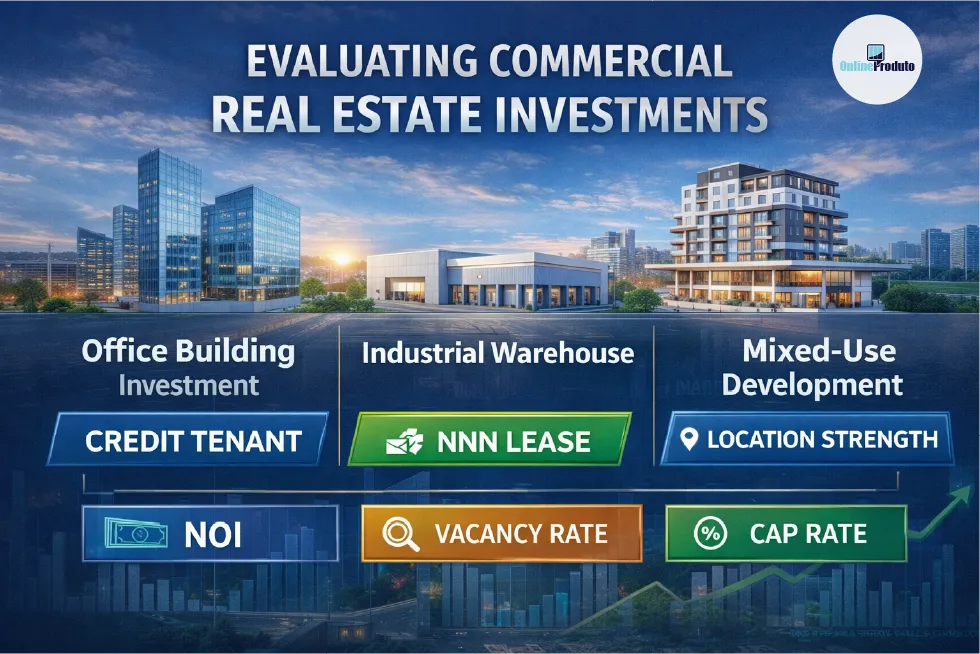
Investors who succeed with business properties aggr8investing do not rely on intuition alone — they perform thorough financial analysis before placing an offer.
Key Metrics to Understand
| Metric | What It Means | Why It Matters |
|---|---|---|
| Net Operating Income (NOI) | Revenue minus operating expenses | A key measure of property profitability |
| Cap Rate | NOI ÷ Purchase Price | Helps compare returns across markets and property types |
| Cash‑on‑Cash Return | Annual cash flow ÷ Cash invested | Measures cash profitability on actual invested capital |
| Vacancy Rate | Percentage of unleased space | Higher vacancy lowers income predictability |
For example, a property with a strong NOI and low vacancy in a market with growing employment is often a better long‑term risk than one with high vacancy and no rent escalators — even if both properties cost the same.
Breakdowns: The 7 Main Commercial Investment Categories
Different commercial property types behave very differently. Smart investors diversify among these categories to balance returns and risk.
| Property Type | Typical Lease Length | Typical Investor Profile |
|---|---|---|
| Office buildings | 5–10+ years | Established businesses |
| Retail centers | 3–10+ years | Shops, service businesses |
| Industrial warehouses | 3–7+ years | Logistics and distribution |
| Healthcare facilities | 7–15+ years | Medical specialists |
| Multifamily (large units) | 1+ years | Apartment communities |
| Hospitality | Daily occupancy | Tourism/leisure |
| Mixed‑use developments | Varies | Retail + residential + offices |
Each type has different cash flow patterns, tenant risk, and management needs — and business properties aggr8investing teaches you how to analyze each on its own terms.
The Role of Location and Market Forces
Even the best underwriting can’t save a property in a declining market. That’s why business properties aggr8investing places heavy emphasis on market context.
Some key factors to evaluate:
- Employment growth
- Population trends
- Industry drivers (tech, logistics, healthcare)
- Supply pipeline (new construction)
- Infrastructure development
For example, industrial assets near major logistics hubs benefit from the continued growth of e‑commerce. Mixed use developments near transit corridors increasingly attract businesses and patrons seeking convenience.
Real Examples: How Smart Investors Implement This Strategy
To bring the strategy to life, consider these simplified scenarios:
Example A: Office Investment
Market: A city with growing tech employment
Tenant: A software firm with good credit
Lease: 7‑year net lease with annual rent increases
Result: High income stability and reduced turnover risk
Example B: Industrial Warehouse
Market: Close to major shipping routes
Tenant: Third‑party logistics provider
Lease: Triple net lease (tenant pays many expenses)
Result: Predictable cash flow with lower owner operating risk
These examples show how investor success often comes less from what you buy and more from how you assess income, tenant quality, and market context.
Balancing Risks and Rewards
Every investment has risk — but not all risks are equal.
Major Risks Commercial Investors Face
- Economic downturns reducing tenant demand
- Rising interest rates increasing financing costs
- Deferred maintenance causing cash flow squeezes
- Local oversupply depressing rental rates
A disciplined business properties aggr8investing strategy prepares for these by:
- Stress‑testing cash flow under conservative assumptions
- Requiring meaningful rent coverage ratios
- Building liquidity reserves for unexpected repairs
- Diversifying by property type and geography
This risk‑aware mindset prevents emotional decision‑making that often destroys wealth.
Practical Steps to Get Started
If you’re ready to apply business properties aggr8investing, here’s a simple roadmap:
- Educate Yourself First
Learn key commercial metrics (NOI, cap rate, cash flow) before chasing deals. - Define Strategic Criteria
Decide on target markets, minimum rent expectations, and tenant standards. - Run Multiple Scenarios
Build conservative, moderate, and aggressive financial models for every property. - Partner with Experienced Professionals
Brokers, property managers, and attorneys with CRE expertise are invaluable. - Stay Patient and Disciplined
Great deals are not rare; they just don’t come every day.
Which Commercial Property Is Best to Invest In?
There’s no universal answer. The “best” commercial property depends on your goals:
- Stable income with low management complexity? Industrial or triple‑net leased assets.
- Growth in rental income over time? Mixed use or office in transitioning markets.
- Inflation‑protected cash flow? Properties with built‑in rent escalators.
What matters most is matching the asset’s risk and income profile to your investment objectives — not chasing the latest trend.
Why This Strategy Outperforms Speculation
Speculating on price appreciation is inherently risky — especially in today’s unpredictable market environment. Business properties aggr8investing moves away from speculation and toward structured, measurable financial outcomes.
By prioritizing rental income, disciplined underwriting, and market intelligence, this strategy helps you:
- Protect capital in volatile environments
- Grow income year after year
- Build a diversified commercial portfolio
- Scale investment capacity prudently
In other words, it turns commercial property investing into something that behaves more like a business you own — rather than a bet you make.
Final Thoughts: A Sustainable Path Forward
Whether you’re transitioning from residential real estate, or considering commercial property for the first time, adopting a framework like business properties aggr8investing gives you clarity and control.
Instead of asking “which property will go up in price next?”, you learn to ask:
- “Which asset delivers consistent income today?”
- “How will cash flow perform under stress?”
- “Which markets are growing for real business demand?”
Answering these questions with data and discipline is the true difference between passive buyers and confident investors.
If you commit to the process, your commercial real estate journey won’t just be about owning buildings — it will be about building lasting financial resilience.
For More Similar Article Visit: OnlineProduto