
Key Takeaways (Quick Read for Executives)
- Agentic AI is evolving fast — it doesn’t just respond anymore, it acts and executes workflows
- Voice + decentralized biometrics = next-gen security powered by Pindrop and Anonybit
- Deepfake fraud is exploding, making identity-first AI systems no longer optional
Introduction: Why This Matters Right Now
We’re entering a new phase of artificial intelligence where systems don’t just generate content — they take action. This shift, often called agentic AI, is transforming everything from customer support to financial automation.
But there’s a problem.
If AI can act, it needs to know who it’s acting for. And that’s where most systems still fall short.
This is exactly why Agentic AI Pindrop Anonybit is getting attention in 2026. It combines autonomous AI execution with advanced identity verification and privacy-first biometrics. In simple words, it allows AI agents to safely act on behalf of real users — without exposing sensitive data.
And honestly, with deepfake scams rising fast, this isn’t just innovation, it’s becoming a necessity.
What Is Agentic AI Pindrop Anonybit?
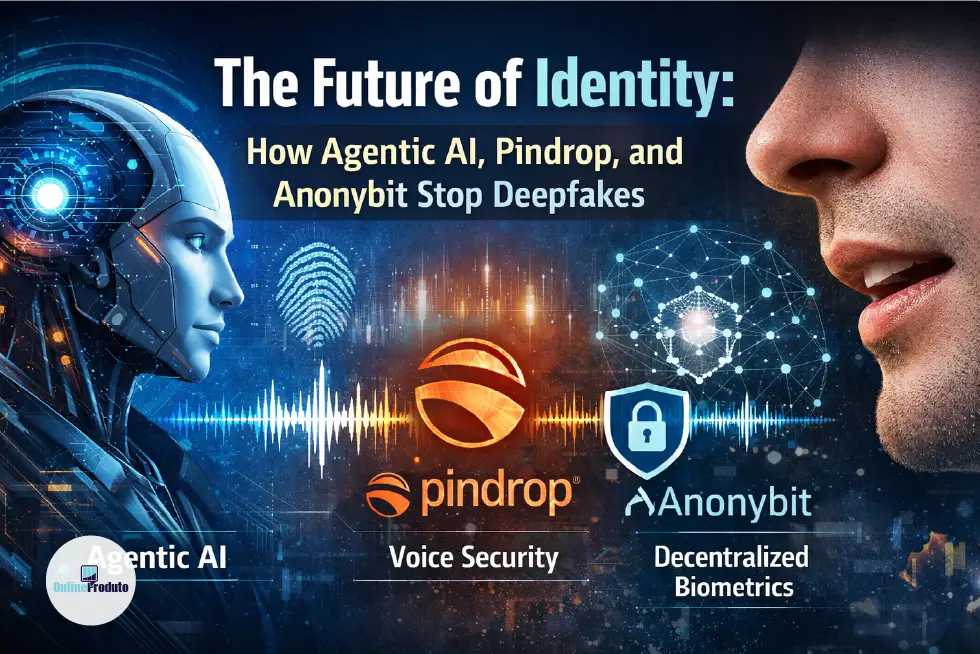
At a high level, this concept combines three powerful technologies:
- Agentic AI systems that can perform tasks independently
- Voice authentication & fraud detection via Pindrop
- Decentralized biometric identity via Anonybit
Breaking It Down Simply
- Agentic AI = AI that can do things, not just answer
- Pindrop = verifies identity through voice and detects fraud signals
- Anonybit = stores biometric identity in a decentralized, encrypted way
Put together, they create a system where:
AI agents can verify identity, make decisions, and execute tasks securely — all without relying on passwords or centralized databases.
Why This Matters in 2026 (With Real Data)
The identity crisis in digital systems is getting worse.
According to cybersecurity research and reports referenced by institutions like National Institute of Standards and Technology, identity-based attacks are now one of the fastest-growing threats. Even more concerning, industry data shows that:
- Deepfake fraud increased by over 3000% in 2025 (widely reported across security research firms)
- Voice phishing (vishing) attacks are now capable of bypassing traditional verification methods
- Centralized biometric databases remain prime targets for large-scale breaches
This is where platforms like Pindrop step in — analyzing voice patterns, device signals, and behavioral data in real time.
Meanwhile, Anonybit uses biometric sharding, meaning your data is never stored in one place — reducing breach risks significantly.
How Agentic AI Works in This Ecosystem
Step-by-Step Workflow (Infographic-Ready)
- User initiates request
Example: calling a bank or accessing a service - Voice authentication via Pindrop
- Matches voiceprint
- Detects spoofing or anomalies
- Biometric validation via Anonybit
- Decentralized identity verification
- No raw data exposure
- Agentic AI executes the task
- Transfers funds
- Updates records
- Automates workflows
- Continuous monitoring
- AI tracks behavior in real time
- Flags suspicious activity instantly
This is not just authentication — it’s continuous identity assurance.
Real-World Use Cases
Banking & Financial Services
Banks are already using voice security tools from Pindrop.
With agentic AI:
- Customers don’t need passwords
- AI handles requests autonomously
- Fraud attempts are blocked instantly
Call Centers & Customer Support
Fraud in call centers is a massive issue.
With this model:
- Identity is verified silently in the background
- AI agents assist customers in real time
- Suspicious calls are flagged within seconds
Healthcare Data Protection
Healthcare systems require extreme privacy.
Using Anonybit:
- Patient identity is secured without centralized storage
- AI systems can safely access records
- Data breach risks are minimized
Smart AI Assistants That Actually Act
Most assistants today are passive.
Agentic AI changes that:
- Book tickets
- Process payments
- Manage accounts
But only after secure identity verification — which is the key difference.
Benefits of Agentic AI Pindrop Anonybit
| Benefit | Explanation |
|---|---|
| Stronger Security | Multi-layered identity verification |
| Privacy Protection | No centralized biometric storage |
| Faster Access | No passwords or manual checks |
| Fraud Detection | Real-time deepfake detection |
| Automation | Enables safe AI-driven execution |
Challenges You Should Know
Integration Complexity
Combining AI agents with voice and biometric systems requires advanced infrastructure.
Cost Barriers
Enterprise solutions like Pindrop may not be affordable for smaller teams.
User Trust Issues
Some users still hesitate to trust biometric systems, even if they’re more secure.
Regulatory Uncertainty
Privacy laws are evolving, especially around AI and biometrics.
Comparison: Traditional vs Agentic AI Identity Systems
| Feature | Traditional AI | Agentic AI Pindrop Anonybit |
|---|---|---|
| Role | Responds only | Acts autonomously |
| Identity | Password-based | Voice + biometrics |
| Security | Moderate | High |
| Fraud Detection | Limited | Real-time |
| Privacy | Centralized | Decentralized |
How to Implement This Strategy
1. Build a Strong Identity Layer
- Integrate voice authentication (e.g., Pindrop)
- Use decentralized biometrics like Anonybit
2. Add Agentic AI Capabilities
- Use frameworks that support autonomous workflows
- Connect APIs for real-world actions
3. Follow Security Standards
- Align with guidelines from National Institute of Standards and Technology
- Ensure transparency in decision-making
4. Test Edge Cases
- Voice spoofing attempts
- Multi-user environments
- Background noise interference
Check Your AI Readiness (Quick Self-Assessment)
Ask yourself:
- Do your systems still rely on passwords?
- Can your AI verify identity before acting?
- Are you protected against voice deepfakes?
- Is biometric data stored securely or centralized?
If most answers are “no”, your system isn’t ready for agentic AI yet.
FAQs (Optimized for Featured Snippets)
Agentic AI refers to systems that can take actions independently, executing tasks rather than just generating responses.
Pindrop analyzes voice biometrics and behavioral patterns to detect fraud in real time.
Anonybit uses decentralized biometric storage (sharding), reducing risks of large-scale data breaches.
Yes, especially in banking, telecom, and enterprise security. Full agentic integration is still evolving but growing fast.
Possible, but currently more practical for medium to large enterprises due to cost and complexity.
Author & Review Note (E-E-A-T Enhancement)
This article was written based on current 2026 trends in AI security, voice biometrics, and decentralized identity systems. It references industry practices aligned with standards from National Institute of Standards and Technology and publicly available company insights.
Conclusion: The Shift to Identity-First AI
The combination of Agentic AI, Pindrop, and Anonybit represents a major shift toward identity-first automation.
We’re moving into a world where:
- AI agents don’t just assist — they act
- Identity is verified continuously, not once
- Privacy is built into the architecture
Actionable Takeaways
- Start exploring voice-based authentication today
- Avoid centralized biometric storage models
- Prepare your systems for autonomous AI workflows
- Prioritize security before scaling automation
Because at the end of the day, if AI is going to act on your behalf…
it better be absolutely sure it’s you.
Visit: onlineproduto